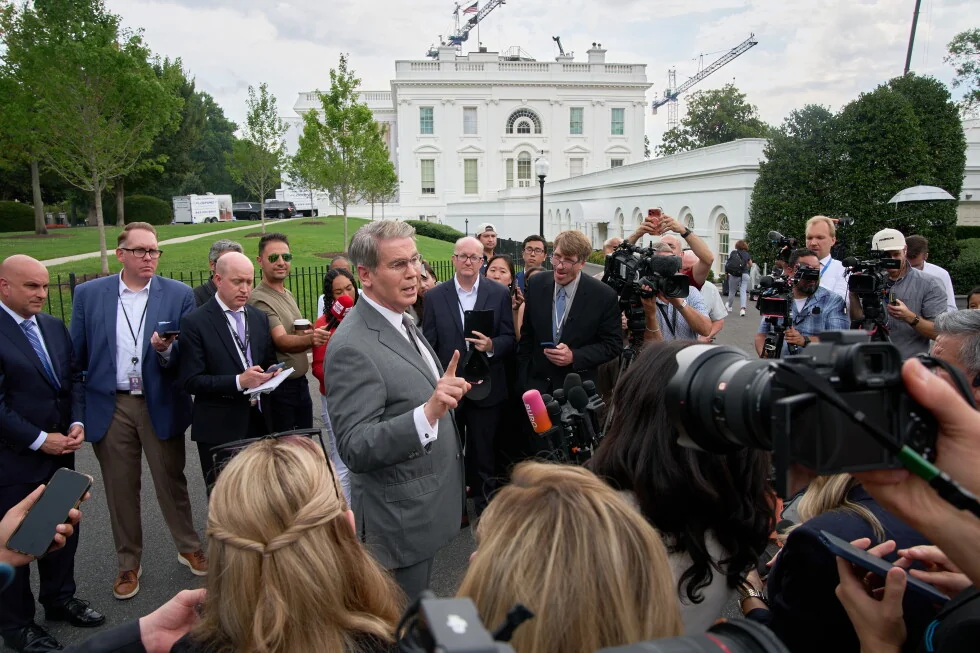
財務長官ベッセントによる債券市場の落ち着かせようとする取り組みは、まだ成果を上げていない。
August 21st, 2026
財務長官ベッセントによる債券市場の落ち着かせようとする取り組みは、まだ成果を上げていない。
🇯🇵 日本語
Interest rates rebounded on Thursday despite Treasury Secretary Scott Bessent's attempts to limit longer-term borrowing costs, showing that Wall Street investors remain worried about rising government debt, heavy borrowing by tech companies, and the Federal Reserve's commitment to fighting inflation.
The yield on the 10-year Treasury note, a key benchmark for mortgage rates, climbed back to 4.69% on Thursday, nearly matching its level early Wednesday before Bessent surprised financial markets by announcing that the Treasury would double the size of a bond buyback program starting next month, from $2 billion to $4 billion per operation.
The buybacks are intended to reduce the supply of 10- to 30-year bonds and boost their prices, and yields on bonds fall when prices rise.
Bessent remarked on CNBC Thursday that the bond repurchase program could potentially exceed $4 billion.
“We have an extensive toolkit at our disposal, so we’ll see,” Bessent said.
“We believe that the yields do not reflect the underlying fundamentals.”
Escalating bond yields are driving up borrowing costs for both consumers and enterprises, and the Trump administration has prioritized lowering interest rates as a key objective.
Meanwhile, home sales have declined sharply as mortgage rates have climbed throughout the year.
President Donald Trump has frequently insisted that the Federal Reserve reduce interest rates, yet the current upward trajectory is chiefly propelled by financial markets.
The 30-year bond yield climbed to 5.23% on Thursday, only marginally below the 19-year peak reached on Tuesday.
Bessent further indicated that the Trump administration would unveil a fresh initiative to curb the government's budget deficit, potentially as early as Monday.
He contended that the deficit is set to reach its zenith this year, partly owing to tariff reimbursements, which constitute a transient factor.
Although the deficit has remained substantial for years, total debt surpassed $40 trillion on Wednesday—an extraordinary milestone reached just months after the national debt first exceeded $39 trillion in April.
Additionally, the Congressional Budget Office projected earlier this week that the annual gap between government revenue and spending would exceed $2 trillion this year, a striking figure that is unusual outside of economic downturns.
Gennadiy Goldberg, head of U.S. rates strategy at TD Securities, contended that the onus of deficit reduction rests primarily with Congress, rather than with the Treasury Department.
"What we are witnessing is that the market retains some skepticism about the Treasury's ability and willingness to support these moves," Goldberg said.
Another factor driving yields upward is the substantial debt that major technology firms are accumulating to finance AI data centers.
Their flood of bond issuances is expanding the options available to bond investors, which depresses bond prices and consequently elevates their yields.
Inflation also remains a threat, as rising oil prices continue to exert pressure due to uncertainty about when the conflict with Iran will allow tankers to leave the Persian Gulf freely again.
Prices increased again on Thursday after Trump threatened Iran with “the MOST CRUSHING ECONOMIC OPERATION EVER TAKEN AGAINST ANY COUNTRY.”
Brent crude is now near $94 per barrel, compared with roughly $72 before the war began.
The Fed typically combats inflation by raising its benchmark interest rate to curb borrowing and spending, thereby cooling the economy.
Yet new Fed chair Kevin Warsh has not signaled whether the Fed will adopt such a measure.
At his most recent press conference in late July, he sowed confusion regarding whether he regards higher rates as the appropriate strategy.
He further indicated that the Federal Reserve might soon shift the metric it employs to track inflation, which it aims to hold at 2%.
Inflation has exceeded that threshold for over five years, registering 3.7% in June, as measured by the Fed’s preferred indicator.
Mark Cabana, head of U.S. rates strategy at Bank of America Securities, noted that a principal driver of elevated borrowing costs is simply the high level of uncertainty about how the Fed will manage inflation and what it will do if things don't go as planned.
Yet Warsh has stressed that he avoids giving such signals, preferring to let financial markets set interest rates based on economic conditions rather than on expectations of Fed actions.
Bessent's intervention, however, seems to conflict with that aim, as markets now consider what further Treasury steps might be taken to control rates.
The escalation in interest rates has intensified scrutiny on Warsh to elucidate his stance ahead of his much-anticipated address at the Federal Reserve's annual symposium in Jackson Hole, Wyoming, next Friday.
"Now the onus rests squarely with the Fed, and in practical terms, with Kevin Warsh," Cabana observed.
"The market is now questioning whether Warsh will rise to the occasion—can he articulate a more compelling strategy?"
Warsh was appointed by Trump after his predecessor, Jerome Powell, concluded his tenure in May.
Trump relentlessly criticized Powell for declining to lower interest rates, fueling apprehensions that Warsh may be inclined to reduce them in order to appease Trump.
Short-term bond yields fell after the Fed's July 28-29 meeting, while longer-term yields rose.
BNP Paribas strategists called this an unusual reaction to a Fed meeting, possibly suggesting investors think the Fed prefers a lower benchmark rate rather than a higher one.
While Bessent is referring to billions of dollars in bond buybacks, the Treasury market is so vast that even acquisitions on that scale may exert limited influence.
Analysts at Macquarie, an investment bank, project that the U.S. government will need to issue nearly $550 billion in bonds this quarter to fund its operations.
Historical evidence further suggests that government interventions in the bond market have only limited impact.
"While such measures can reduce volatility and provide temporary relief, they have not permanently lowered borrowing costs when fiscal, inflationary, or supply dynamics remained unfavorable," according to strategists at UBS Wealth Management, citing precedents from Japan and the United Kingdom.
August 21st, 2026
Trending Articles
ウォーレン・バフェットがバークシャー・ハサウェイの会長職を退き、後継者計画を前進させる
Warren Buffett relinquishes chairman role at Berkshire Hathaway, advancing his succession plan
ウォーレン・バフェットがバークシャー・ハサウェイの会長職を退き、後継者計画を前進させる
Warren Buffett relinquishes chairman role at Berkshire Hathaway, advancing his succession plan
トランプはさらに多くの報道機関を標的にし、CNN、MS NOW、ポリティコをホワイトハウスから締め出すと述べた
Trump targets more news outlets, saying he will ban CNN, MS NOW and Politico from the White House
トランプはさらに多くの報道機関を標的にし、CNN、MS NOW、ポリティコをホワイトハウスから締め出すと述べた
Trump targets more news outlets, saying he will ban CNN, MS NOW and Politico from the White House
日本銀行、主要金利を1.25%に引き上げ、31年ぶりの高水準
Bank of Japan lifts key rate to 1.25%, a 31-year high
日本銀行、主要金利を1.25%に引き上げ、31年ぶりの高水準
Bank of Japan lifts key rate to 1.25%, a 31-year high

Anthropicは、自社のモデルClaudeが自らの後継モデルの構築を支援していると述べている。
Anthropic says its model Claude is helping to build its own successor
Anthropicは、自社のモデルClaudeが自らの後継モデルの構築を支援していると述べている。
Anthropic says its model Claude is helping to build its own successor
連邦準備制度が今利上げに踏み切る理由、そしてそれが何を意味するのか
Why the Federal Reserve is raising rates now, and what it signifies
連邦準備制度が今利上げに踏み切る理由、そしてそれが何を意味するのか
Why the Federal Reserve is raising rates now, and what it signifies
米国株は原油価格と債券利回りの低下を受けて6週間ぶりの高値に急騰
US stocks surge to six-week high as oil prices and bond yields decline
米国株は原油価格と債券利回りの低下を受けて6週間ぶりの高値に急騰
US stocks surge to six-week high as oil prices and bond yields decline
FRBが3年ぶりに主要金利を引き上げ、利下げを求めるトランプの呼びかけに逆らう
Fed hikes key rate for 1st time in 3 years, defying Trump's calls for a cut
FRBが3年ぶりに主要金利を引き上げ、利下げを求めるトランプの呼びかけに逆らう
Fed hikes key rate for 1st time in 3 years, defying Trump's calls for a cut
失業保険申請件数は19万6千件に減少、7月中旬以来の低水準、解雇は依然として低調
Unemployment Claims Fall to 196,000, Lowest Since Mid-July Amid Persistent Low Layoffs
失業保険申請件数は19万6千件に減少、7月中旬以来の低水準、解雇は依然として低調
Unemployment Claims Fall to 196,000, Lowest Since Mid-July Amid Persistent Low Layoffs
トランプ、AIのリスクを「でっち上げ」と非難し、AIとデータセンターに対する「病的な陰謀」を主張
Trump denounces AI risks as a ‘hoax,’ alleging a ‘SICK conspiracy’ against AI and data centers
トランプ、AIのリスクを「でっち上げ」と非難し、AIとデータセンターに対する「病的な陰謀」を主張
Trump denounces AI risks as a ‘hoax,’ alleging a ‘SICK conspiracy’ against AI and data centers

最高裁判所、メイン州のロブスター漁師によるGPS船舶追跡装置要件への異議申し立てを審理へ
Supreme Court to decide on Maine lobsterman’s challenge to GPS boat tracker requirement
最高裁判所、メイン州のロブスター漁師によるGPS船舶追跡装置要件への異議申し立てを審理へ
Supreme Court to decide on Maine lobsterman’s challenge to GPS boat tracker requirement